
3 Major Factors Affecting the Price of Hair Extensions
1. Remy Hair or Non-Remy Hair?
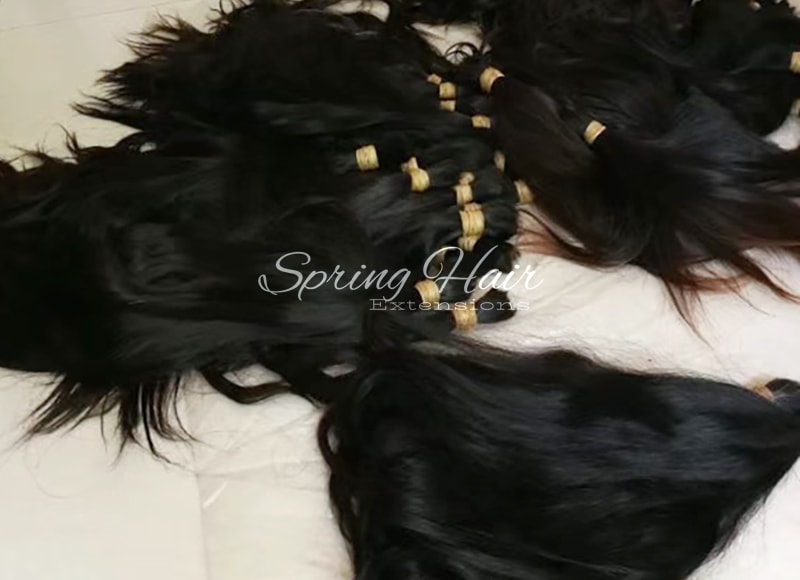
This is regarded as the most crucial price factor in the manufacturing of hair extensions. To produce Remy Hair finished hair extension products, a high quality of hair braids (natural hair cut from donors) is essential. Such braids boast healthier and stronger hair strands. They can preserve their fine conditions after necessary processing, ensuring a more extended lifespan. Usually, they maintain such good conditions due to the donors' lifestyle, as these donors seldom style or color their natural hair. In the past nearly thirty years, such hair braids have been in increasingly short supply. Thus, they are sourced at very high prices.
PS, What is Remy Hair?
Remy Hair is a particular hair type. It pertains to the method of collecting and manufacturing hair where the root and tip ends can be clearly distinguished.
2. Dark Shade or Light Shade?
As we all know, hair grows very slowly. On average, hair grows about 1 centimeter per month and approximately 12 to 15 centimeters a year. However, the popular lengths of hair extensions sold on the market are 18 inches, 20 inches and 22 inches. Moreover, the largest market for hair extensions is among Caucasian customers, and there is a greater demand for lighter shades, such as icy blonde, platinum blonde, silver blonde, etc., compared to darker ones. Since most of the sources of hair supply are from Asian regions, it makes the process of turning dark hair into light hair an indispensable step. To ensure the quality of the final hair extension products, factories need to, first of all, select the highest quality raw hair for processing, and secondly, improve a series of techniques for processing and dyeing. These factors will inevitably lead to the price of light shade hair being somewhat higher than that of dark shade hair. Generally speaking, it is about 10% higher.
3. Single Drawn, Double Drawn or Super Double Drawn?
For the same hair type and shade, the ratio of the longest hair can also cause a slight variation in prices.
What is the longest hair ratio?
Typically, you will never find that all the strands in 100g of hair are of the same length! Firstly, that's not how natural hair grows; secondly, it would make the finished hair extension extremely expensive.
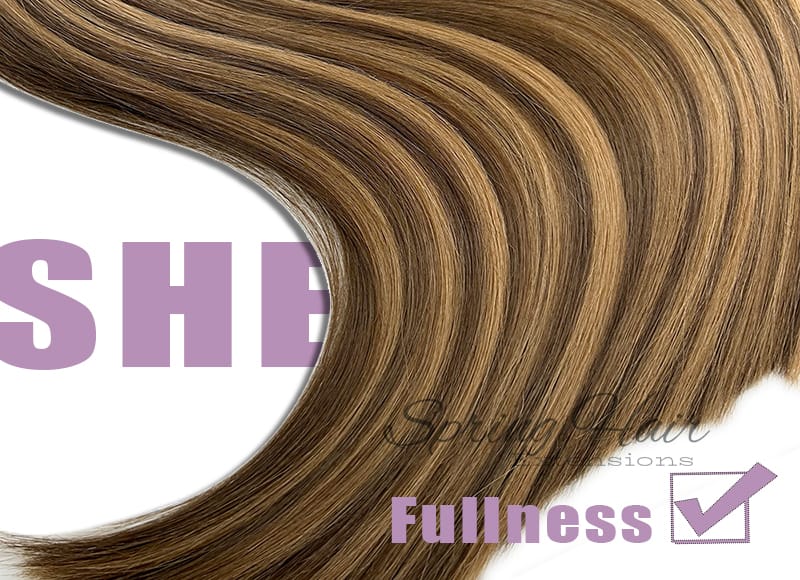
So, usually, the factory uses different percentages to represent different levels of ratio to meet customers' requirements. These are known as single drawn (a lower level), double drawn (a higher level), and super double drawn (an even higher level), etc. Although not every end customer prefers extremely full hair ends (they might consider them to look unnatural), higher ratios imply better volume and appearance and often come with a higher price. However, it should be noted that there is no unified industry standard for these levels of hair end fullness. Basically, different factories have different standards for double drawn and super double drawn.
In this article focusing on the three major factors influencing the price of hair extensions, we've just touched upon the basics. There's actually a wealth of details in the industry that we haven't covered yet, such as how the slow color bath processing affects the quality of hair extensions, what Minimum Order Quantity (MOQ) would be reasonable when you’re thinking about placing bulk purchase order…
We're committed to continuing to share more important information about hair extensions industry with you in our future discussions. If you have any questions or need further insights in this regard, feel free to contact us directly. We'll be happy to assist you.